


How long does Ultherapy last is usually the second question people ask, right after Does it even work. The honest answer is that Ultherapy builds results slowly and lets them fade slowly too, and both timelines depend heavily on your age and how well you look after your skin afterward. This guide breaks down exactly what happens week by week, how long your results should hold, and what changes by decade so you can plan your treatment with realistic expectations.
Does Ultherapy Actually Work?
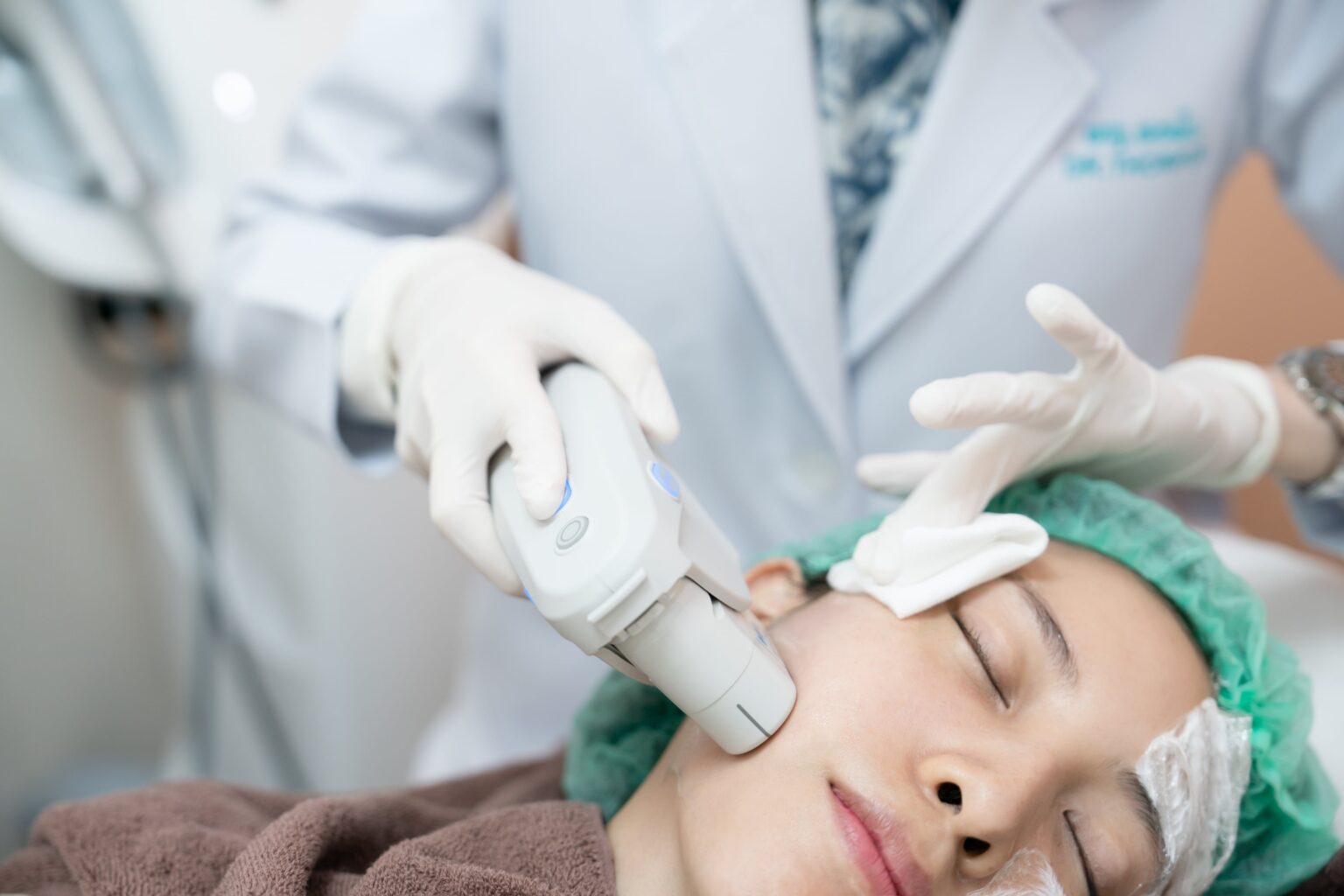
Ultherapy uses microfocused ultrasound with visualization, known as MFU-V, to heat the deep layers of skin, including the SMAS layer that surgeons tighten during a surgical facelift. The heat creates tiny points of controlled thermal injury that trigger your body to build new collagen over the following months. A peer-reviewed systematic review of the technology confirms that Ultherapy’s underlying MFU-V technology holds FDA clearance specifically for lifting the brow, tightening the submental area and neck, and softening wrinkles on the upper chest. That clearance is based on measurable, photographed improvement, not just how a patient feels about their own skin.
This matters for anyone asking if Ultherapy works, because the treatment is not a temporary fluid shift the way a filler is. It relies on your own biology to rebuild structural support underneath the skin, which is exactly why the visible lift shows up gradually rather than the moment you leave the clinic.
The Ultherapy Results Timeline: What to Expect Week by Week
Ultherapy results unfold in stages, and knowing what to expect at each point keeps you from second-guessing a treatment that is actually working exactly as designed.
| Timeframe | What You Can Expect |
|---|---|
| First few days | Mild swelling, tingling, or slight redness. Skin usually looks the same as it did before treatment. |
| 2 to 4 weeks | The earliest signs of tightening begin, often first around the brow. This is the Ultherapy results after 1 month stage, and changes are usually subtle rather than dramatic. |
| 6 to 8 weeks | More noticeable lifting appears along the jawline and lower face as new collagen accumulates. |
| 3 months | Most patients see a clear improvement and describe their skin as firmer and better contoured. |
| 3 to 6 months | Results reach their peak as the collagen remodeling process completes. |
| 6 months onward | Results settle into a stable, long-lasting phase. |
If you are only one month out and wondering why your skin still looks the same, that is completely normal. A study on the skin physiology of MFU-V treatment tracked skin firmness after a single session and recorded significant elasticity improvements at the 12-week and 24-week marks, not sooner. Give the collagen rebuilding process the full three to six months before judging your results.
How Long Does Ultherapy Last?
Once your results reach their peak, most people keep them for 1 to 2 years. Some patients, especially those who protect their skin from sun damage and stay consistent with skincare, enjoy visible benefits for 3 to 5 years. The treated area plays a role too. Ultherapy on the neck tends to last slightly less long than the face, since the neck sees more movement and has thinner skin.
Ultherapy does not stop the aging process. It gives your skin a genuine, structural head start, and your natural aging then continues from that improved baseline rather than from where you started before treatment.
Ultherapy Results by Age: What to Expect in Your 30s, 40s, 50s and 60s
Age is one of the biggest factors in both how visible your results are and how long they last. Collagen production naturally slows as we get older. Research comparing collagen synthesis in younger and older skin found that older skin simply produces less new collagen at the cellular level than younger skin does, which helps explain why both the results and their durability vary so much by decade. Here is what that typically means for your Ultherapy timeline.
| Age Range | What to Expect | Typical Longevity |
|---|---|---|
| 30s | Preventative lift, mild laxity improves, subtle overall refinement | 18 months to 2 years or more |
| 40s | Visible jawline and neck tightening, the most common treatment window | 12 to 24 months |
| 50s | Noticeable lift, though changes may be more gradual; a second session is sometimes recommended | 12 to 18 months |
| 60s and older | Improvement possible with healthy, sun-protected skin; results tend to be more modest | 9 to 15 months |
None of this means Ultherapy is off the table if you are in your 50s or 60s. Skin quality, sun history, and general health matter more than age on paper. A consultation with a qualified provider is the only real way to know what result and what timeline fits your skin.
What Affects How Long Your Ultherapy Results Last
- Age, and how efficiently your skin still produces collagen
- How much skin laxity you started with before treatment
- Sun exposure, since UV damage breaks down collagen faster than your body can rebuild it
- Your skincare routine, particularly consistent SPF use and hydration
- Which area was treated, since the face generally holds results longer than the neck
- Lifestyle habits like smoking and heavy alcohol use, both of which speed up collagen breakdown
- How many treatment lines and how much energy your provider used during the session
Ultherapy vs Other Lifting Treatments: How Does Longevity Compare
Ultherapy is not the only non-surgical option for skin tightening in Thailand, and it is worth knowing how it stacks up against the alternatives. Our HIFU vs Ultherapy vs Thermage in Thailand guide breaks down how these three popular treatments compare on depth, downtime, and results, while our Non-Surgical Face Lifting in Thailand comparison looks at Ultherapy alongside HIFU and thread lifts for anyone still deciding between options. In general, Ultherapy’s ultrasound-based approach tends to produce more durable lifting in the deeper SMAS layer compared with surface-level treatments, which is part of why it remains a popular choice for patients who want results that last well over a year.
How to Make Your Ultherapy Results Last Longer
- Wear a broad-spectrum SPF every day, even indoors, since UV exposure is the fastest way to break down new collagen
- Keep your skin hydrated with a consistent moisturizing routine
- Add a retinoid or vitamin C product to support ongoing collagen production
- Avoid smoking and limit alcohol, both of which accelerate collagen breakdown
- Book a touch-up session around the 12 to 18 month mark before results have fully faded, rather than waiting until you are back to your starting point
When to Consider a Touch-Up Treatment
Most patients get the best value by scheduling a touch-up before results disappear completely, rather than after. If you are already comparing your options, our How Much Does Ultherapy Cost in Thailand guide covers current pricing so you can budget for both your first treatment and a future touch-up. If skin laxity has progressed further than a touch-up can address, treatments like Thermage FLX in Thailand use a different energy delivery method and may be worth discussing with your provider.
The Bottom Line on How Long Ultherapy Lasts
Ultherapy rewards patience. The results are not instant, but they are real, and for most people they last well over a year before another session is worth considering. Whether you are one month in and wondering if it worked, or you are ready to book your first session, knowing the timeline helps you set expectations that actually match how the treatment works. If you are ready to find a trusted provider, Doodeena’s Thailand aesthetic clinic directory makes it easy to discover, compare, and book a clinic that fits your goals and your budget, without the guesswork.
Frequently Asked Questions About Ultherapy Results and Longevity
Does Ultherapy really work?
Yes. Ultherapy is FDA-cleared and has been studied extensively, and it works by triggering your body’s own collagen production rather than relying on artificial filling. Results take months to appear because collagen remodeling is a biological process, not an instant fix.
What should I expect from Ultherapy results after 1 month?
At one month, most people see very subtle changes at most, sometimes just around the brow. This is the earliest stage of collagen rebuilding, and full results typically take another two to five months to appear.
Do Ultherapy results last longer on the face or the neck?
Face results generally last a little longer than neck results, since the neck moves more and has thinner skin. Both areas commonly hold results for 12 to 24 months depending on the individual.
Is one Ultherapy session enough?
Most patients only need one session to see their full result. Those with more significant skin laxity sometimes benefit from a second session to reach their goals.
What happens once Ultherapy results fade?
Your skin does not return to exactly where it started, since the new collagen your body built does not disappear overnight. It simply continues to age forward from an improved baseline, which is why many patients choose a touch-up before returning to their pre-treatment appearance.