


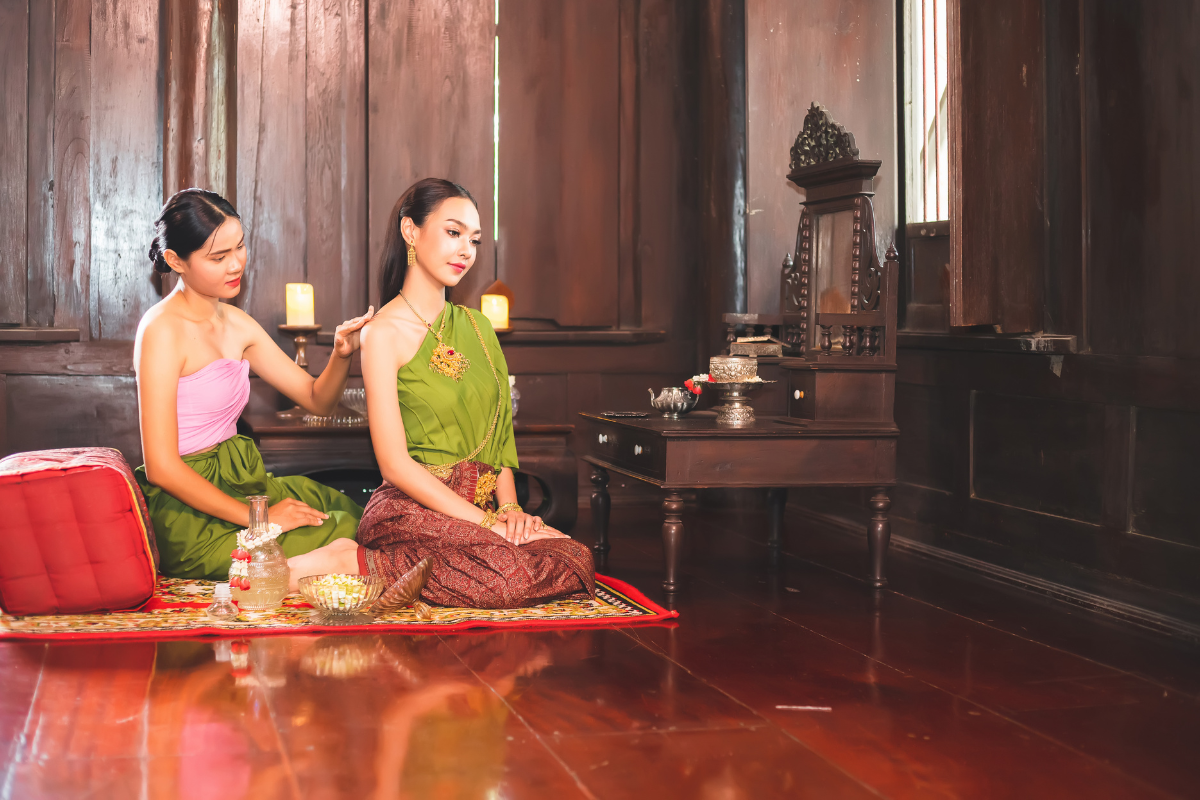
In May 2025, Opal Suchata Chuangsri became the first Thai woman to win Miss World, adding to a pageant record that already includes two Miss Universe crowns and a Miss International title. The same year, a Thai businesswoman owned the Miss Universe organisation itself. These are not coincidences. Thailand takes beauty seriously, as a cultural value, an economic driver, and a source of national pride. Understanding Thai beauty standards means understanding why Bangkok is home to some of the most advanced aesthetic clinics in Asia, why every pharmacy in the country stocks rows of brightening products, and why the pursuit of glowing, even-toned skin has shaped Thai culture for centuries. This article explores where those ideals come from, what they look like today, and how they connect to one of the world’s most dynamic beauty markets.
Quick Summary
- The core Thai beauty ideal centres on fair, bright, smooth skin, a concept captured in the Thai phrase phiu khao (ผิวขาว), meaning white or fair skin.
- This preference has historical roots in class distinctions: fair skin indicated wealth and an indoor life, while darker skin was associated with outdoor agricultural labour.
- Modern Thai beauty standards also value an oval face, large eyes, slim frame, and groomed, clean presentation as expressions of care and social respect.
- These standards drive a multi-billion-dollar aesthetic medicine and skincare market, making Thailand the second-largest aesthetic clinic hub in Asia.
- Thai Gen Z and social media culture are actively broadening the definition of beauty, with growing acceptance of darker skin tones, body diversity, and natural looks.
The Skin Ideal: Understanding Phiu Khao
The two Thai words that sit at the centre of Thai beauty culture are phiu khao. Phiu means skin. Khao means white or pale. Together, they describe the skin ideal that has shaped Thai beauty practices for centuries: fair, luminous, and unblemished. Understanding why this ideal took root requires a brief look at how Thai society was historically structured.
In pre-modern Thai society, the ability to stay out of the sun was a privilege of class. Royalty, aristocrats, merchants, and those with indoor occupations maintained pale skin as a natural consequence of their lives. Farmers, fishermen, and labourers worked outside under one of Asia’s most intense UV climates, and their skin darkened accordingly. Over time, the visible difference in skin tone became a proxy for social position, and fair skin came to signal not only wealth but refinement, care, and femininity.
This pattern is not unique to Thailand. Similar associations between pale skin and social status appear across traditional Asian societies, from Japanese court culture to Chinese imperial aesthetics. In each case, the logic was practical before it became aesthetic: pale skin indicated you had not had to labour in the sun, which meant you had resources and social standing.
In modern Thailand, the class association has softened but not disappeared. Phiu khao remains aspirational, partly through inertia of cultural tradition, partly through the influence of Thai media and advertising, which has historically featured actors and presenters with lighter complexions, and partly through the practical concern of UV protection in a country where the UV index regularly exceeds 11 year-round.
Thai Beauty Standards Beyond Skin: The Full Ideal
Skin is the primary focus of Thai beauty culture, but the complete picture includes several other physical and behavioural traits that Thai culture associates with attractiveness and social grace.
| Beauty standard | What it involves | How it manifests in practice |
|---|---|---|
| Fair, even-toned skin | Phiu khao: minimal tanning, bright and clear complexion | Whitening products, SPF daily, brightening treatments, glutathione supplements |
| Smooth, flawless texture | No acne, acne marks, large pores, or visible sun damage | Skincare clinics, laser toning, chemical peels, medical-grade skincare |
| Oval face, soft features | Low cheekbones, soft jaw, pointed chin, symmetrical structure | Jaw Botox, facial contouring, non-surgical facial shaping |
| Large, expressive eyes | Bright, prominent eyes enhanced through makeup and procedures | Double eyelid tape, eye makeup techniques, occasional blepharoplasty |
| Slim, petite frame | Small waist, long legs, slender appearance | Fitness culture, slimming clinics, body contouring treatments |
| Cleanliness and grooming | Tidy presentation seen as social respect, not just vanity | Daily skincare, fragrance, neat hair, careful makeup application |
Grooming and cleanliness carry cultural meaning beyond aesthetics in Thailand. Presenting yourself as well-maintained communicates respect for those around you, not just concern for how you look. This is part of why skincare is taken seriously across all income levels in Thai society.
Thailand on the World Pageant Stage

Thai beauty culture’s intensity is perhaps best illustrated by the country’s track record in international pageantry. Few nations of Thailand’s size have matched it.
Thailand’s first international beauty milestone came in 1965, when Apasra Hongsakula became the country’s first Miss Universe winner. Thailand won the title again in 1988 through Porntip Nakhirunkanok, then claimed Miss International in 2019. The most recent achievement came in May 2025, when Opal Suchata Chuangsri won Miss World, becoming the first Thai woman in the competition’s 74-year history to take that crown. In 2022, Thai businesswoman Anne Jakrajutatip acquired the Miss Universe Organisation itself, the first time a Thai company had owned a major international beauty pageant.
These achievements matter beyond their symbolic value. They reflect an industry of professional pageant preparation, coaching, styling, and clinical treatment that is highly developed in Thailand. Young women who compete at the national level typically work with dermatologists, nutritionists, fitness trainers, and aesthetic clinicians as part of their preparation. That infrastructure of support has helped normalise aesthetic treatments among the general population, contributing to the broader clinic culture Bangkok is known for today.
How Thai Beauty Standards Built Bangkok’s Aesthetic Clinic Market
The direct line from phiu khao to Bangkok’s aesthetic clinics is not difficult to trace. When the most culturally valued skin quality is brightness and even tone, treatments that address melanin, pigmentation, and skin clarity become primary care rather than optional luxury. That is why the treatments most in demand at Bangkok clinics directly reflect Thai beauty ideals rather than the anti-aging priorities that dominate Western markets.
Thailand’s beauty and wellness market is now worth over $8 billion and growing at around 10% annually, according to Thailand’s government market analysis. Bangkok has become the second-largest aesthetic medicine hub in Asia after South Korea, and the demand is driven heavily by brightening and skin quality treatments rather than surgical procedures.
The treatments most commonly sought by Thai clients are a direct reflection of these cultural ideals.
| Treatment category | What it addresses | Why it aligns with Thai beauty standards |
|---|---|---|
| Glutathione IV drips | Systemic antioxidant; reduces melanin production bodywide | Most direct approach to whole-body brightening; highly popular in Bangkok |
| Laser toning and Q-switched laser | Targets surface and deep melanin deposits | Addresses dark spots, uneven tone, and dullness resulting from sun exposure |
| Chemical peels (fruit acid) | Surface exfoliation; cell turnover acceleration | Removes dulling dead skin layer; brightens without extended downtime |
| HIFU and non-surgical lifting | Tightens and contours without surgery | Supports the slim oval face ideal; minimal downtime suits working lifestyles |
| Botox (jaw and forehead) | Slims jawline; relaxes expression lines | Creates the soft, oval facial profile central to Thai facial beauty standards |
| Skin booster injections | Deep hydration; improves skin plumpness and texture | Supports the smooth, dewy complexion associated with youth and health |
Our guide to skin whitening in Thailand covers the clinical brightening landscape in detail, including how glutathione, laser, and peel treatments are used in combination for faster results. And our glass skin in Thailand guide explores how Bangkok clinics create the intensely smooth, luminous complexion that has become the modern expression of phiu khao.
Thai Beauty Standards Are Changing
Thai beauty culture is not static. The same forces of globalisation, social media, and generational shift that have altered beauty ideals worldwide are reshaping what it means to be beautiful in Thailand.
Gen Z Thais are notably more vocal about pushing back against rigid skin tone standards. Dark-skinned Thai celebrities and influencers with larger followings are celebrating complexions that would have been downplayed in earlier media generations. Thai rapper and cultural figure Lisa of BLACKPINK, whose complexion is darker than the traditional phiu khao ideal, has an enormous domestic following and has become a figure of pride rather than someone to be measured against a lightness standard.
The Swai Meiku makeup aesthetic that emerged from Thai social media, characterised by dewy skin, peachy cheeks, and a natural finish rather than heavy coverage, reflects a shift toward ‘looking good in your own skin’ rather than maximally altering it. This is a movement away from the idea that beauty requires transformation and toward the idea that skilled enhancement of what you already have is the goal.
That shift is visible in how brands, clinics, and media now talk about brightening treatments. The framing has moved away from ‘whitening’ and toward ‘clarity,’ ‘even tone,’ and ‘glow,’ language that positions skin health as the goal rather than lightness as an absolute. This is the same evolution described in our T-Beauty guide: Thai beauty culture is modernising without abandoning its roots, and the result is a market that serves both traditional ideals and contemporary values simultaneously.
What This Means if You Are Visiting Thailand for Skin Treatments

For international visitors seeking aesthetic treatments in Bangkok, understanding Thai beauty standards provides useful context for what you will find. Bangkok’s clinics are not simply trying to meet Western demand for anti-aging treatments. They have developed expertise in brightening, toning, and skin quality treatments through decades of serving a domestic market where those outcomes are culturally primary. That depth of clinical experience translates into real results for international patients as well.
The most practically useful thing to know is that the language around skin treatments in Bangkok often differs from Western equivalents. What a Western clinic calls ‘hyperpigmentation treatment’ a Bangkok clinic calls ‘brightening’ or ‘whitening.’ The underlying treatments are medically similar; the framing reflects the local cultural context, not a less serious clinical standard.
If you are planning to visit a clinic while in Bangkok, our guide to the best skin clinics in Bangkok helps you find and compare trusted providers by treatment type and area of the city.
Frequently Asked Questions About Thai Beauty Standards
What is phiu khao and why does it matter in Thai culture?
Phiu khao (ผิวขาว) means ‘fair skin’ or ‘white skin’ in Thai. It is the most consistently valued skin quality in traditional Thai beauty culture. Its roots lie in historical class distinctions: fair skin indicated an indoor life associated with wealth and privilege, while sun-darkened skin was associated with agricultural and outdoor labour. The ideal persists today through media, advertising, and social conventions, though younger generations are actively challenging it.
Is fair skin required to be considered beautiful in Thailand?
Not required, and increasingly not assumed. While phiu khao remains a widely referenced beauty ideal, Thai beauty culture is broadening. Social media, international celebrities, and a growing body-positivity movement among Thai Gen Z have made darker complexions more visible and celebrated in mainstream culture. The ideal is shifting from a specific skin tone toward overall skin clarity, health, and glow.
Why is Thailand such a strong country in beauty pageants?
Thailand has a deeply institutionalised beauty preparation ecosystem: professional coaching, styling, clinical treatment, and nutritional support are all standard parts of pageant preparation at the national level. This infrastructure, combined with a culture that takes personal presentation seriously as a form of social respect, produces consistently strong international competitors. Thailand has now won Miss Universe twice, Miss World once (2025), and Miss International, and a Thai company owns the Miss Universe organisation.
What skin treatments do Thai people seek most?
The most popular treatments among Thai clients are glutathione IV drips for systemic brightening, laser toning for dark spots and uneven pigmentation, chemical peels for cell turnover and surface clarity, and skin booster injections for hydration and texture. All of these directly address the phiu khao ideal of bright, even, smooth skin. Anti-aging treatments such as HIFU and Botox are also popular, but they are typically framed around face contouring rather than purely about reducing wrinkles.
Is Bangkok a good place to get skin treatments as a tourist?
Yes. Bangkok’s strength in brightening and skin quality treatments reflects decades of serving a domestic market where those outcomes are the primary goal. Clinics are well-equipped, prices are competitive by international standards, and English is widely spoken at reputable venues. As with any medical aesthetic treatment, choosing a licensed, credentialed clinic matters most.
Understanding Thai Beauty: The Cultural Foundation of T-Beauty
Thai beauty standards are a living cultural phenomenon, not a fixed list of requirements. They have roots in class history, have been shaped by centuries of cross-cultural influence, and are currently being renegotiated by a generation that wants to celebrate what they look like rather than transform it. What they have consistently produced, regardless of era, is a culture that invests deeply in skin care and skin health, and an industry that has become globally significant as a result. That is the foundation on which T-Beauty stands, and it is the cultural context that makes Bangkok’s aesthetic clinics genuinely excellent rather than merely affordable. Whether you are here as a visitor curious about Thai culture or as someone considering a skin treatment, that context makes a difference. Explore what is available through the Doodeena clinic directory and understand the market with confidence.