


Have you ever sat in a medical aesthetician’s chair, nervously holding a mirror, and asked the exact same question every injector hears during a consultation: “How many units will I actually need?” It is completely normal to want a precise number before a tiny needle gets anywhere near your face. You want to know what to expect, how much it will cost, and exactly what is required to achieve that smooth, rested look you are after.
Before we discuss the numbers, we need to clarify what a “unit” actually means. A Botox unit is a measure of biologic potency, not a measurement of volume or liquid. You cannot measure it in milliliters like a serum or a dermal filler. Furthermore, units are not interchangeable across different neurotoxin brands. Fifty units of one brand might behave entirely differently than fifty units of another.
If you are researching how many units of botox for forehead treatments are required, the answer depends on your unique anatomy. However, the short answer is that typical ranges fall between 10 to 30 units. The exact amount relies heavily on the specific areas being treated, your individual muscle strength, and the aesthetic goals you have discussed with your provider.
In this comprehensive guide, we will break down exactly how your facial anatomy dictates your treatment. You will learn about average unit counts for different zones, why dosing varies so drastically from person to person, and what to expect during your first-time treatment.
Understanding Forehead Anatomy
The Frontalis Muscle
The frontalis is the large muscle responsible for lifting your eyebrows. Every time you show surprise, excitement, or apply mascara, this muscle contracts upward. Over time, that repetitive upward pulling creates horizontal forehead wrinkles. Treating this area requires careful precision, as the frontalis is your primary elevating muscle.
The Glabella and Procerus (The “11s”)
Right below your forehead, between your eyebrows, sit the corrugator supercilii and procerus muscles. These muscles do the exact opposite of the frontalis. They pull the brows down and inward when you concentrate, squint, or feel frustrated, creating those deep vertical frown lines often called the “11s.”
The concept of balance
Experienced medical injectors often recommend treating both the frontalis and the glabella together. Relaxing the forehead (the lifting muscle) without also relaxing the glabella (the pulling down muscle) can result in a heavy or drooping brow. According to leading aesthetics experts, balancing these opposing forces is the secret to a natural, refreshed appearance.
Average Botox Units for Forehead Areas
Treating forehead lines only
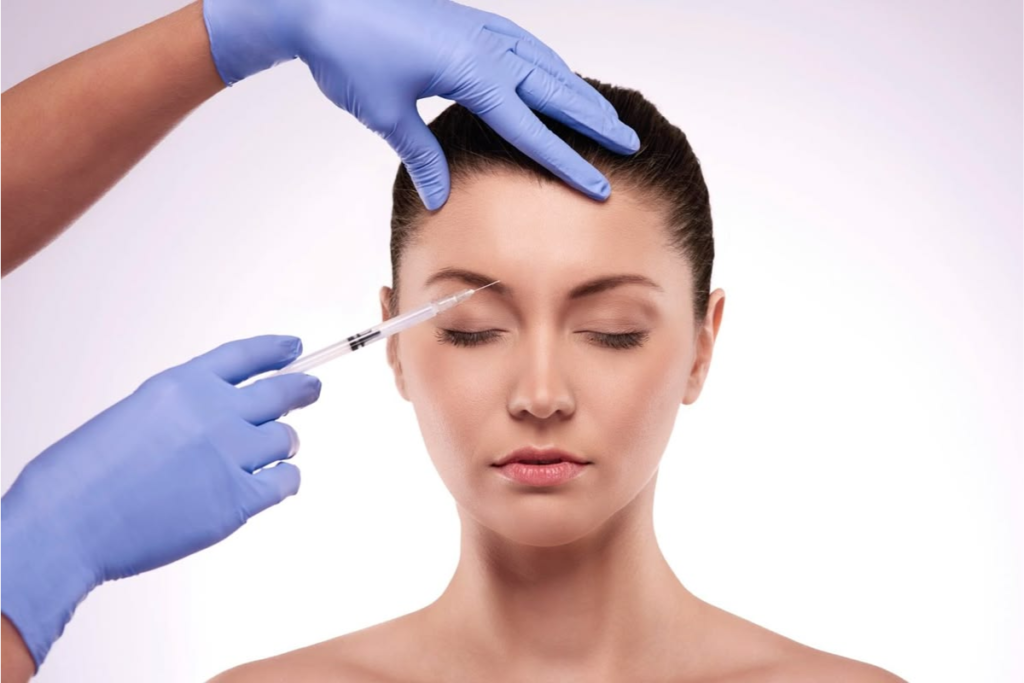
The standard range for treating the frontalis muscle sits between 6 and 20 units. The FDA-labeled reference for this area is often around 10 units. When asking how many units of botox for forehead lines or how many units of botox for forehead wrinkles, 10 to 15 units is a common starting point. Providers typically start conservatively here to preserve some natural expression and prevent the brows from feeling too heavy.
Combining the forehead and 11s
Most patients quickly realize that treating isolated areas rarely yields the best overall aesthetic. Combining the forehead and the 11s is the most common real-world treatment scenario. This approach often requires around 30 units total. Generally, this breaks down to about 20 units for the glabella and 10 units for the forehead. If you are wondering how many units of botox for forehead and 11s or how many units of botox for forehead and glabella you might need, this 30-unit benchmark is a highly reliable estimate for your consultation.
Adding the eyes (Crow’s Feet)
For a fully refreshed look, many patients opt for a total upper-face approach. This involves treating the forehead, the glabella, and the crow’s feet around the eyes. Treating all three areas typically ranges from 40 to 60 units total. Patients researching how many units of botox for forehead and eyes should budget for this higher range. The crow’s feet alone often require about 12 units per side, adding 24 units to your total treatment plan.
The upper limits
Safety limits and aesthetic maximums are crucial topics to discuss. People frequently search online to ask what is the maximum units of botox for forehead treatments. While clinical maximums exist for medical conditions like migraines, cosmetic maximums are much lower. Injecting too much neurotoxin into the frontalis can result in a “frozen” or heavy look. Most providers cap the cosmetic dose for the upper face around 60 to 70 units total to ensure you retain a natural, expressive appearance.
Factors That Affect Your Unit Count
Muscle strength and gender
Your baseline muscle mass heavily influences your required dose. Men generally require a higher dose to achieve the same smoothing effect as women. Stronger facial muscles simply need more units to adequately relax. Individuals who have very expressive faces or who unconsciously flex their forehead muscles throughout the day will also require a slightly higher dose to see optimal results.
First time vs. maintenance
If you are new to cosmetic injectables, your provider will likely take a highly conservative approach. Many beginners ask how many units of botox for forehead first time treatments require. The answer is usually on the lowest end of the spectrum. The concept of “baby Botox” or microdosing is incredibly popular for easing into the treatment. This method uses fewer units spread strategically across the forehead for softer motion reduction.
Desired aesthetic results
Your personal goals dictate your treatment plan. Do you want a “soft freeze” where natural movement remains, or do you prefer a completely smooth, immobile look? A soft freeze requires fewer units and precise placement. A completely smooth look requires a standard or slightly higher dose. Communicate your preferences clearly with your injector so they can tailor the unit count to your specific aesthetic vision.
Forehead size and brow position
Anatomy varies wildly from person to person. A larger forehead surface area naturally requires more injection points, which can increase the total unit count needed for an even effect. Furthermore, a naturally low-set brow changes the injection strategy entirely. Providers must use fewer units placed higher up on the forehead to avoid causing the brows to drop further.
Safety, Side Effects, and Touch-Ups
The risks of over-treatment
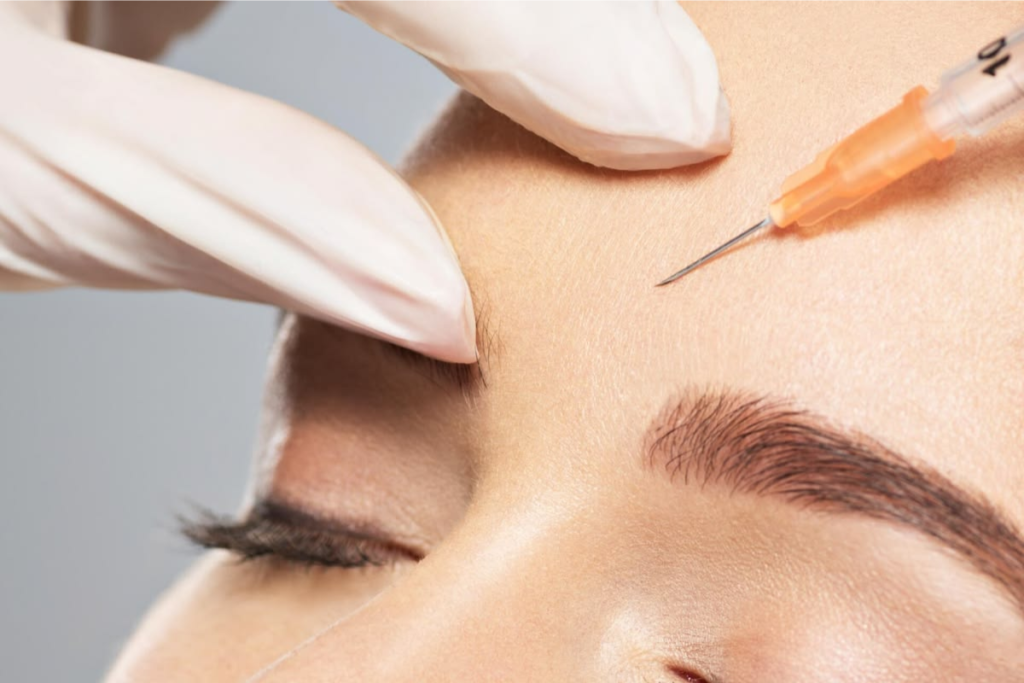
Using too many units in the forehead carries distinct risks. Over-treatment can lead to side effects like brow ptosis, which is a drooping of the eyebrows that makes the eyes look heavy or tired. Another potential issue is a “Spock brow,” where the lateral arches of the eyebrows elevate excessively because the central forehead was overly relaxed. Understanding these risks explains why your injector might suggest starting with a lower dose.
The timeline of results
Botox is not an instant fix. The onset of the treatment begins in a few days, with subtle smoothing becoming visible around day three or four. Peak results show at exactly one to two weeks post-injection. The effects typically last three to four months, depending on your metabolism, activity level, and the specific dose administered.
The 2-week touch-up strategy
Because everyone metabolizes neurotoxins differently, the safest approach is to start conservatively and return for a 14-day touch-up. At the two-week mark, your provider can evaluate the final settled result. If one side needs a slight adjustment, or if you still have too much movement for your liking, they can add a few extra units. This strategy refines symmetry and completely avoids the risk of initial heaviness.
Your Next Steps for a Flawless Forehead
There is no universal number of units that works for every face. The right amount depends entirely on your individual anatomy, your underlying muscle strength, and your personal aesthetic goals. What works perfectly for your best friend might leave you with a heavy brow or persistent wrinkles.
While asking how much units of botox for forehead treatments are needed is incredibly helpful for setting your budget, a medical assessment is what actually dictates the safe and effective unit count. A professional evaluation ensures you get the results you want without compromising your natural expressions.
If you are an expat or visitor in Thailand searching for safe, English-speaking clinics, finding the right provider does not have to be difficult. Use Doodeena to connect with board-certified professionals, receive a personalized facial assessment, get an exact unit quote, and enjoy the clarity of transparent pricing.